
Episode 01
The Road to Tenochtitlán
The 500 Spaniards who didn't conquer the Aztec Empire alone
- Period
- March to November 1519
- Place
- Central Mexico, from the Gulf Coast to the Basin of Mexico
- Runtime
- 16:02
- Status
- Released September 27, 2026
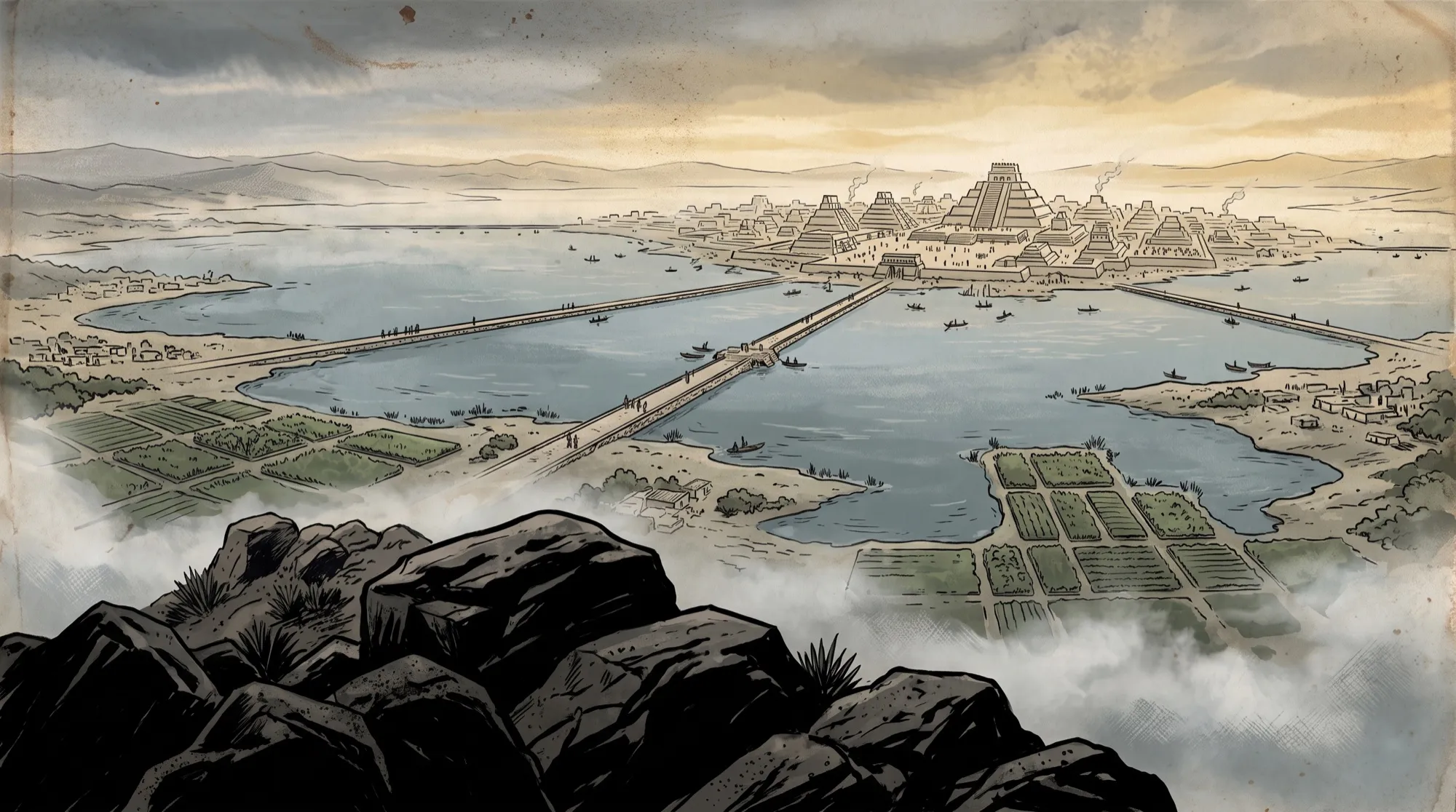
Illustrated reconstruction. The Basin of Mexico from the high pass.
About five hundred Spaniards reached Tenochtitlán in November 1519, but they did not walk the road alone. This episode follows the interpreters, the Totonac and Tlaxcalan allies, and the porters who carried the expedition inland, and the people of Cholula who paid for decisions made by others.
The story
In 1519 an expedition under Hernán Cortés landed on the Gulf Coast with about 500 men and 16 horses. The numbers changed with losses and reinforcements. It had steel, crossbows, firearms and horses. It did not know the roads, the languages or the politics ahead.
The first conversations needed a relay. Jerónimo de Aguilar translated Spanish into Maya. Malintzin translated Maya into Nahuatl. The reply came back the same way. When she began translating directly into Spanish cannot be dated securely.
Cempoala was a major Totonac centre inside a Mexica tribute network, and some of its leaders saw the newcomers as leverage. When the expedition left Cempoala in mid-August 1519, Bernal Díaz says forty Cempoalan warrior-chiefs and two hundred carriers went with it, and that the carriers transported the artillery. Those figures come from one account, written decades later, and apply only to that departure.
Tlaxcala was an autonomous, confederated state with its own internal debates. Its forces fought the expedition in early September 1519. After negotiations, Tlaxcalan leaders chose an alliance: a collective, contested decision, not a surrender. The sources give no single total for the Tlaxcalans who joined the march.
At Cholula in October 1519, Spaniards and their Indigenous allies carried out a large-scale massacre. The killing is not seriously in doubt. Spanish and Tlaxcalan accounts claim the city was planning an ambush; Mexica and other traditions remember it differently. The plot, the motives and the number of dead are still disputed.
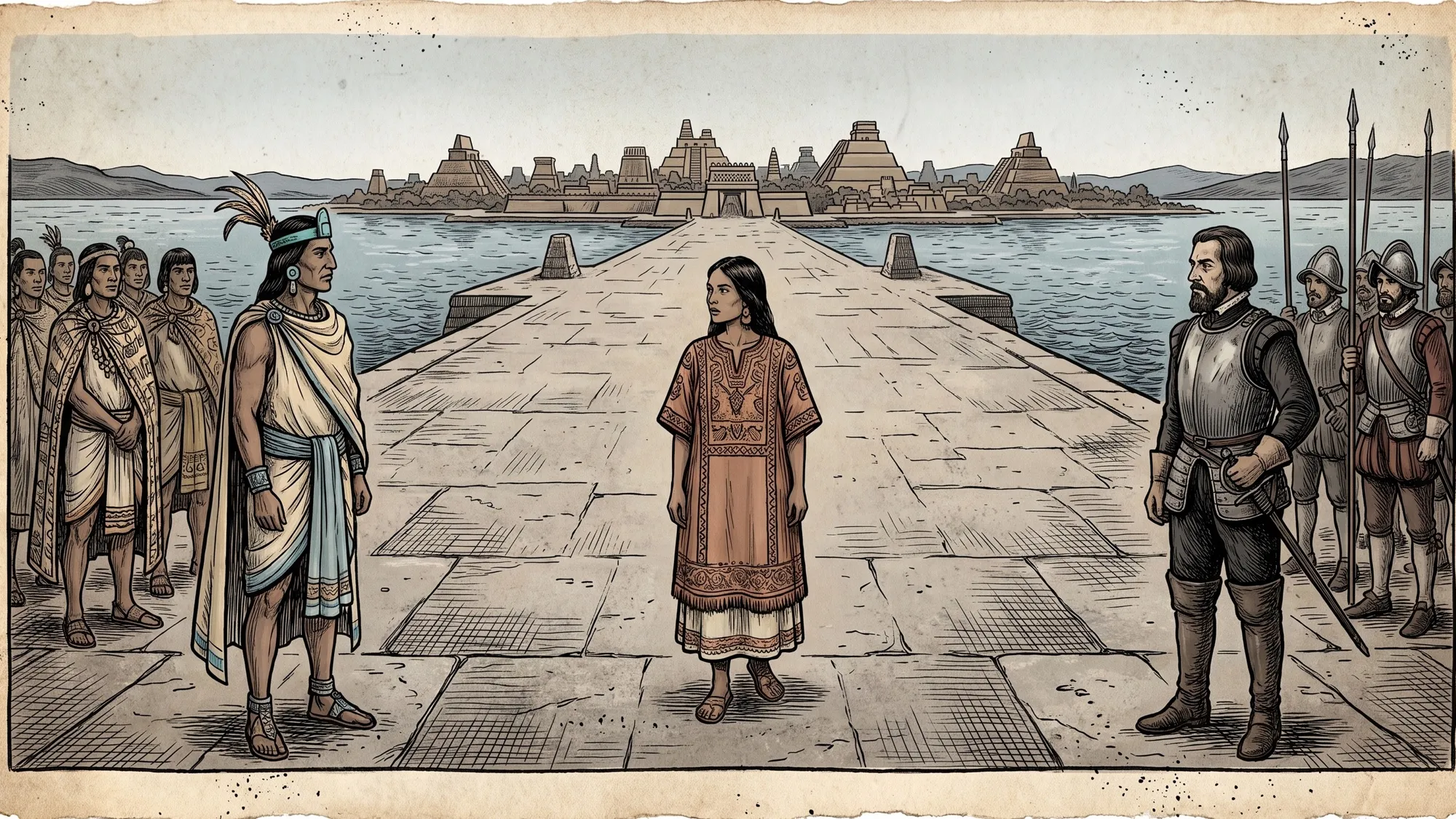
The column then climbed through the pass between Popocatépetl and Iztaccíhuatl, where the Basin and its lakes came into view. On 8 November 1519 it entered Tenochtitlán by the causeways, and Cortés met Motecuhzoma with Malintzin interpreting. The research on this page ends there, with the city reached and not yet conquered.
- About 500
- Men in the Spanish company at the startMasters of the Land (S13)To verify
- 16
- Horses at the startMasters of the Land (S13)To verify
- 40 and 200
- Cempoalan warrior-chiefs and carriers leaving CempoalaBernal Díaz (S3), one retrospective accountTo verify
- Unknown
- Dead at Cholula. Totals vary between sourcesS8, S17Disputed
People
Documented individuals first. Composite figures, drawn to stand for people the sources describe without naming, are listed separately and never presented as real.
Malintzin
Interpreter and political intermediary
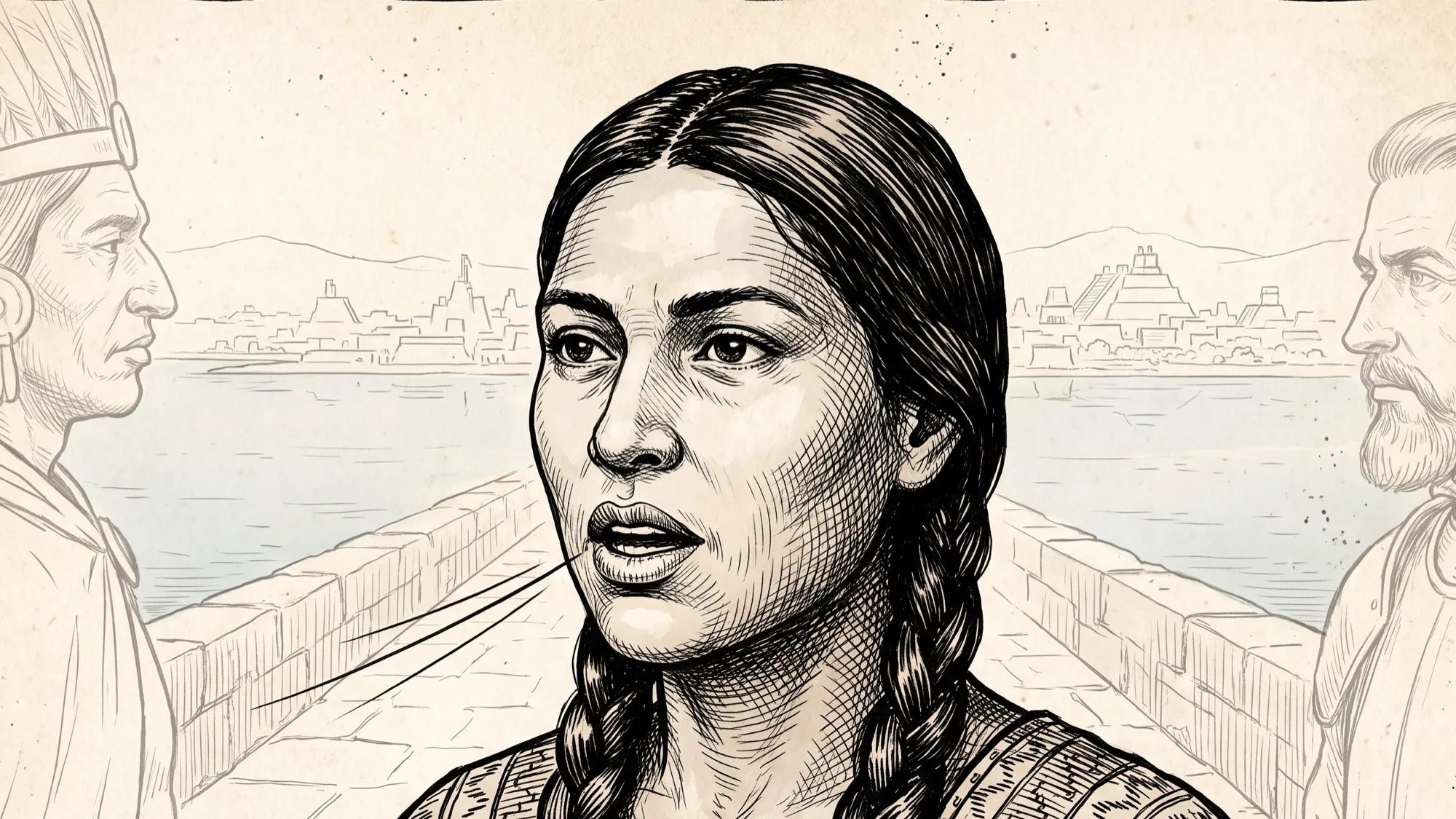
Spoke Nahuatl and Maya. First the Maya–Nahuatl link in a relay with Aguilar, later the central intermediary. Indigenous-made Tlaxcalan images in the Lienzo de Tlaxcala give her striking prominence. She interpreted at the meeting of 8 November.
Source: Evidence Reference S7, S18, S20
Jerónimo de Aguilar
Interpreter, Spanish and Maya
A Spaniard who had lived among Maya speakers. The Spanish end of the early translation chain.
Source: Evidence Reference S18
Hernán Cortés
Expedition commander
Wrote his Second Letter to Charles V to justify his actions, which makes it an interested source. Ordered the attack at Cholula; the intelligence behind it is contested.
Source: Evidence Reference S2, S8, S9
Bernal Díaz del Castillo
Soldier on the march; later chronicler
His True History was written decades later and often argues with other Spanish accounts. The source for the Cempoala carriers and much ground-level detail.
Source: Evidence Reference S3, S4, S15
Xicoténcatl the Younger
Tlaxcalan captain-general
Led Tlaxcalan forces against the expedition in September 1519. One military leader inside a wider Tlaxcalan political system, not Tlaxcala's sole ruler.
Source: Evidence Reference S14, S5
Motecuhzoma
Ruler at Tenochtitlán
Met Cortés on 8 November 1519. His words that day survive only through mediated accounts, not as a transcript.
Source: Evidence Reference S2, S20
Composite figures
The porters, the Totonac ally, the Tlaxcalan warrior
Composite figures
Drawn to represent people the sources describe in groups but rarely name. Not documented individuals.
Timeline
- 1519The expedition lands on the Gulf Coast with about 500 men and 16 horses. S12, S13
- Mid-August 1519Leaves Cempoala for the highlands with Cempoalan warrior-chiefs and carriers. Bernal Díaz (S3)
- Early September 1519Battles with Tlaxcalan forces under Xicoténcatl the Younger. S4, S14
- September 1519Negotiations; Tlaxcalan leaders choose an alliance. S5, S6, S14
- October 1519Massacre at Cholula. The claimed ambush plot remains disputed. S8, S9, S17
- Autumn 1519The column crosses the pass between Popocatépetl and Iztaccíhuatl. S11, S19
Show the full timeline (9 entries)Show fewer
- 8 November 1519Entry into Tenochtitlán; Cortés meets Motecuhzoma, Malintzin interpreting. S2, S20
- 30 October 1520Cortés dates his Second Letter at Segura de la Frontera. WDL 7335, final page
- 8 November 1522The Second Letter is printed at Seville by Jacobo Cromberger. WDL 7335, colophon
What they faced
The climb. The route ran from the Gulf Coast up into the highlands. Period accounts describe strong places and mountainous ground. Our research files do not give reliable altitude figures, so we do not state them.
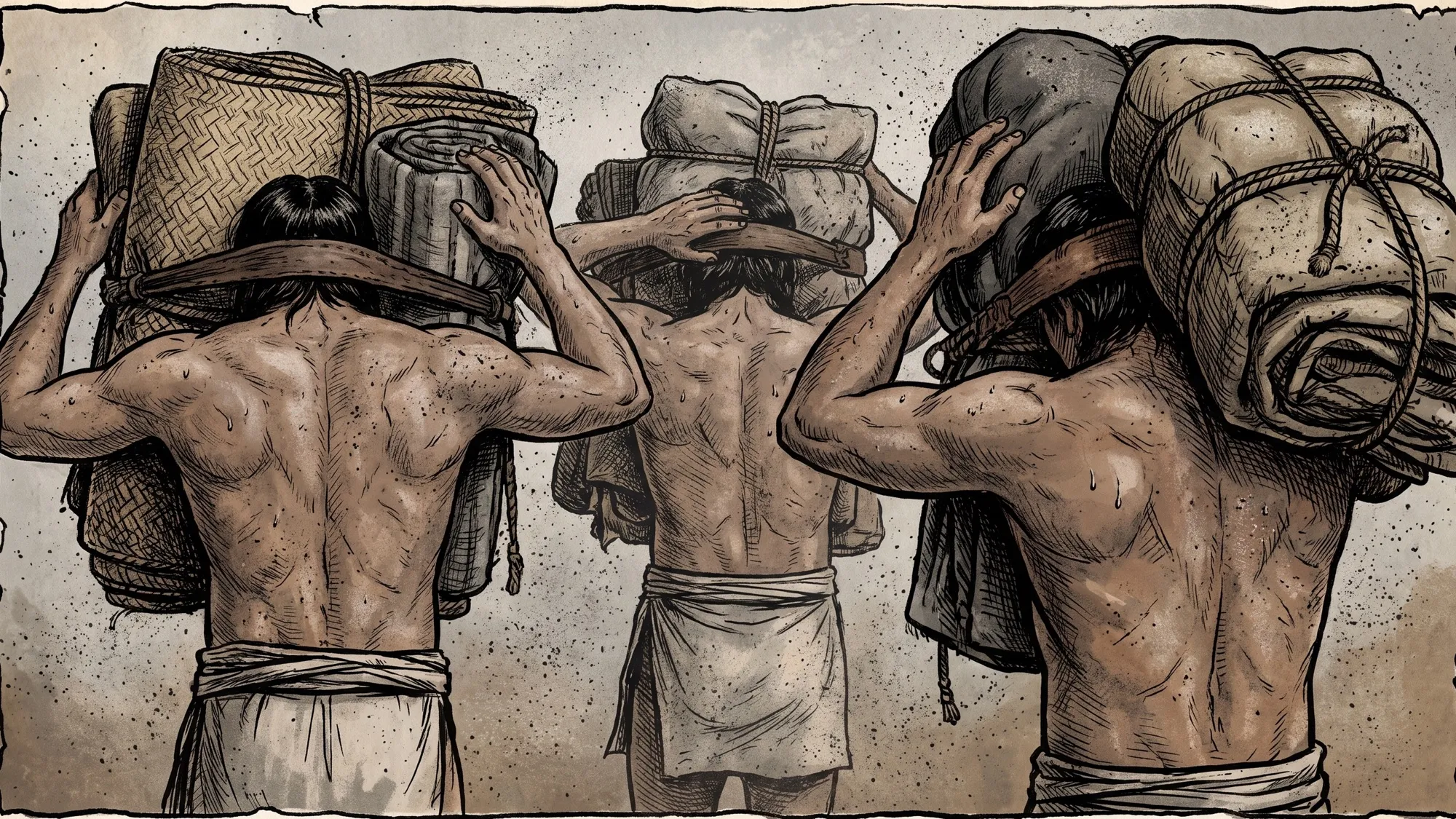
The loads. No pack animals carried the artillery out of Cempoala. People did. Bernal Díaz names two hundred carriers for that departure. Everything else the expedition moved after that, it moved on human backs, and the sources rarely name who.
Food. Every day spent fighting was another day the column had to be fed. Every ally who joined was another mouth. Our sources give no ration figures.
The interpreter's position. Every negotiation, threat and promise passed through Malintzin. Her words decided what each side believed the other had said.
Medical context
The research behind this episode has almost nothing on how wounds were treated on the march, and we will not fill that gap with guesses. Bernal Díaz describes fatigue, wounds and men fighting while wounded. Disease, including the smallpox epidemic that followed in 1520, belongs to the next chapter of this story, not this one.
Maps
The Gulf Coast landing to Cempoala. Inland through the highlands from mid-August to Tlaxcala, early September. Cholula, October. The high pass between Popocatépetl and Iztaccíhuatl. The Basin of Mexico, its lakes and causeways, and Tenochtitlán, 8 November 1519. Planned map plates show the Mexica tribute network as lines of obligation, with Tlaxcala outside it.
Map in preparation. Routes and places will be drawn from period maps and the sources below, with every location labelled by its name at the time and today.
From the record
Words from the people who were there, or from the records made at the time. Translations and mediated accounts are labelled as such.
De la villa de Segura de la frontera desta nueva España a xxx de Otubre de M.D.xx años.
Transcribed from the World Digital Library scan (item 7335). It reads: from the town of Segura de la Frontera in this New Spain, 30 October 1520. Check against the catalogue record before citing.
What is still disputed
These are places where the sources disagree or the record is silent. We show the disagreement rather than resolve it artificially.
- Where the film and this page differ. The released documentary states some points more firmly than our evidence review supports, among them the Cholula ambush plot, a death toll for Cholula, and Motecuhzoma's words on 8 November. Where they differ, this page follows the evidence.
- Whether Cholula was planning an ambush. Spanish and Tlaxcalan accounts say yes; Mexica and other traditions remember it differently.
- How many people died at Cholula. The totals in the sources vary widely.
- How many Indigenous allies marched with the expedition. No source gives one reliable total, and we do not invent one.
- When Malintzin began translating directly into Spanish.
- What Motecuhzoma said on 8 November. His words survive only through accounts written by others, for their own purposes.
Sources and further reading
- Sources listed
- 17
- Checked against the source
- 1
- Not yet checked
- 16
Show all 17 sourcesHide the source list
Primary source
Hernán Cortés, Carta de relación (Second Letter to Charles V). Seville, Jacobo Cromberger, 8 November 1522. World Digital Library item 7335, Library of Congress. View source
Full scan read for title page, dateline and colophon.
Checked against the sourceAmerican Historical Association, primary-source excerpt, "Cortés Meets Xicotencatl."
Not yet checked against the sourceAmerican Historical Association, "Mexica Account of the Cholula Massacre."
Not yet checked against the source
Scholarly secondary source
Latin American Antiquity: Aztec and Tlaxcalan economic interaction.
Not yet checked against the sourceCambridge University Press: Malintzin as a conquistadora and warrior woman in the Lienzo de Tlaxcala.
Not yet checked against the sourceThe Cambridge World History of Genocide: Cholula and other conquest massacres.
Not yet checked against the sourceThe Oxford Handbook of the Aztecs: Cholula in Aztec times.
Not yet checked against the sourceCambridge University Press, Masters of the Land: the Spanish company of about 500 men and 16 horses.
Not yet checked against the sourceCambridge University Press, Cultures and Conquest: Aguilar and Malintzin as interpreters.
Not yet checked against the sourceUniversidad Complutense de Madrid: critical study of Cortés's 1519 route.
Not yet checked against the sourceUNAM: Xicoténcatl Axayacatzin, un guerrero indómito.
Not yet checked against the sourceINAH: the San Gabriel burials at Cholula, later reinterpreted as epidemic burials.
Not yet checked against the sourceMiguel León-Portilla, via the Library of Congress: the meeting dated 8 November 1519.
Not yet checked against the source
Later recollection
Bernal Díaz del Castillo, True History of the Conquest of New Spain, chapter LXI (departure from Cempoala) and chapter LXV (battle with Tlaxcala).
Written decades after the events.
Not yet checked against the source
Reference work
Metropolitan Museum of Art, chronology, Mexico 1400–1600.
Not yet checked against the source
Historical interpretation
American Historical Association, source comparison of conquest accounts, including Cholula and the meeting with Motecuhzoma.
Not yet checked against the sourceAmerican Historical Association, "Understanding Primary Sources" on the conquest of Mexico.
Not yet checked against the source
See an error or know a better source? Send a correction. Read how we research.
In the Knowledge Base
Terms from this episode, explained in full.
- Nahuatlato (interpreter)An interpreter of Nahuatl in colonial New Spain. The role grew out of the conquest, when every exchange between Cortés and the peoples of central Mexico passed through a chain of interpreters.
- SmallpoxA viral disease of high fever and pustular rash. In 1520 it reached Tenochtitlán, a year after Cortés first entered the city, and killed large numbers of people who had never met it.
- Tlameme (porter)The professional carriers of the Nahuatl-speaking world. With no draft animals or carts, central Mexico moved goods, tribute and armies' supplies on human backs, held by a strap across the forehead.
That's what it cost.
Watch next
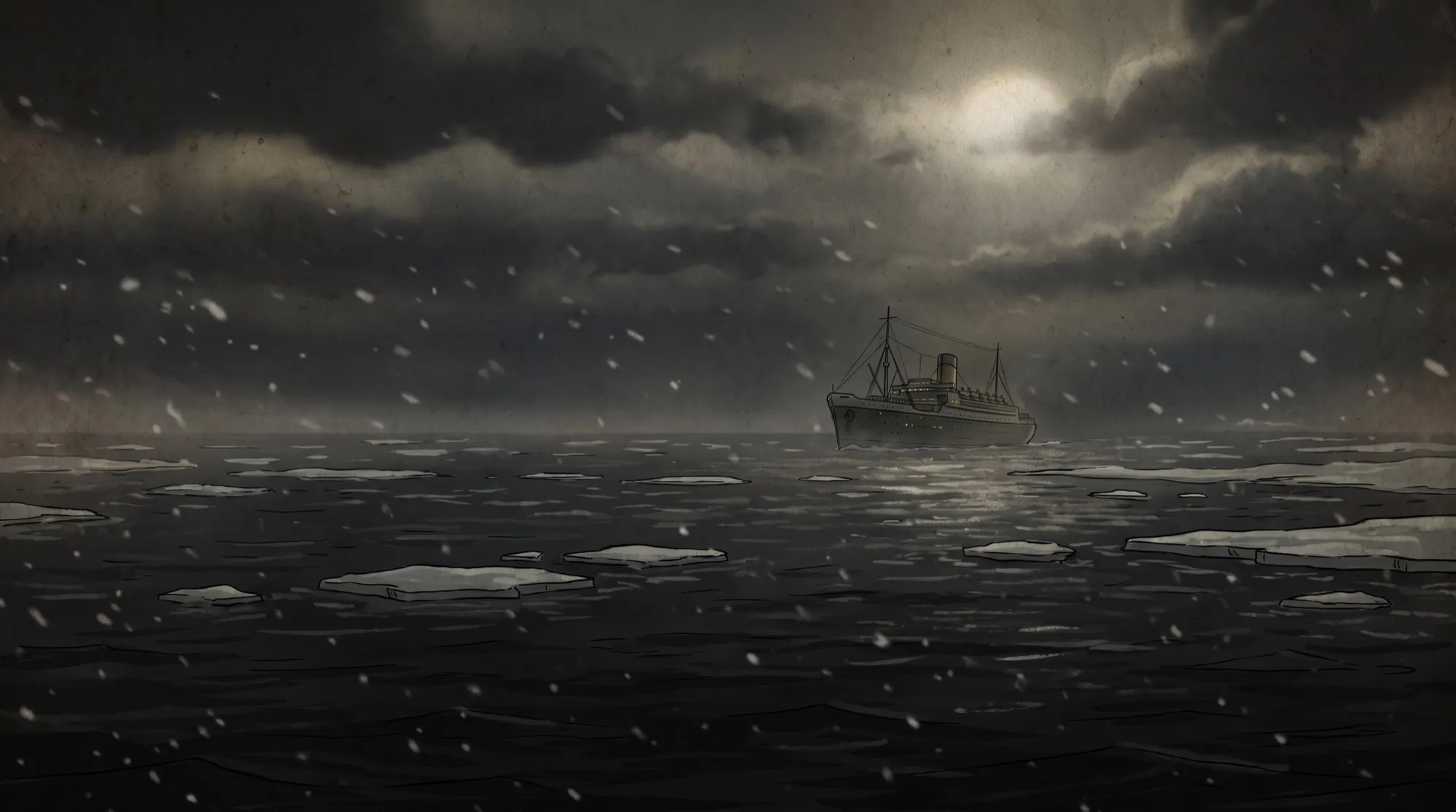
The Wilhelm Gustloff
On 30 January 1945 a former cruise liner left Gotenhafen with refugees, wounded soldiers and navy trainees aboard. That night three torpedoes hit her. The episode follows a ten-year-old boy, a mother of three, a navy doctor and a sailor's family through the sinking and the months after, and asks why no one can say how many died.
The Halifax Explosion
On 6 December 1917 the burning munitions ship Mont-Blanc exploded in Halifax Harbour, killing roughly 2,000 people. This episode follows the doctors, children and families of Halifax and Dartmouth through the blast, the flying glass, the snowstorm that followed, and the weeks of care that came after.